-4.png?width=2000&height=600&name=Vertical%20Version%20of%20Primary%20Logo%20(1)-4.png)
My Journey
75 Soft

Brand A: Roasted peanuts, sugar, contains 2% or less of: molasses, fully hydrogenated vegetable oils (rapeseed and soybean), mono and diglycerides, salt.
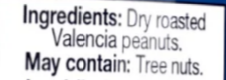
Brand B: Dry roasted peanuts, salt.
Same category. Same aisle. And this is why label reading matters.
One of these is peanut butter. The other just looks like it.
Peanut butter is one of those foods people assume is healthy without ever checking.
It has that reputation. Protein, gym snacks, “clean eating.” So it gets a pass.
But once you flip the jar and read the ingredients, it splits into two completely different foods.
Sometimes.
Peanut butter can be as simple as ground peanuts. Or it can be peanuts plus a bunch of extras that change how it tastes, how it feels, and how easy it is to keep eating.
You won’t know which one you’re holding until you look at the back.
Fully hydrogenated oils and mono and diglycerides are there to keep it smooth and shelf-stable. Not because peanuts need help tasting like peanuts.
When a product needs that kind of intervention to stay stable, it's been processed well past what the original food requires.
Peanut butter should be one ingredient, max. 2. The fact that it often isn't is exactly the kind of thing that makes label reading feel exhausting. So let's just sort it out.
The ingredient list is the only part of the jar that can't lie to you. Everything on the front, "natural," "wholesome," the little heart, the green leaf, none of it has a legal definition. The back does.
When you flip a peanut butter jar over, you're looking for one of four scenarios:
Clean: Dry roasted peanuts. Or: dry roasted peanuts, salt. This is peanut butter.
Errr fine: Peanuts, palm oil, sugar, salt. Four ingredients, nothing industrial. Palm oil keeps it from separating without being a lab additive. Not ideal, but...
Getting iffy: Peanuts, sugar, palm oil, salt, mono and diglycerides. That last one is an emulsifier. You've crossed into processed food territory.
Put it back: Peanuts, corn syrup, sugar, hydrogenated vegetable oils, salt, mono and diglycerides, natural flavor. This has more in common with candy than with actual peanuts.
The specific things to watch for:
Hydrogenated or partially hydrogenated oils (keeps it unnaturally smooth, adds trans fats)
Corn syrup or corn syrup solids (sweeter and cheaper than sugar)
Mono and diglycerides (emulsifier, prevents oil separation)
"Natural flavors" (flavor engineering, not actual peanuts)
Maltodextrin (cheap starch filler)
Peanut butter doesn’t feel like junk food.
You’re not opening it thinking, “I’m about to eat something ultra-processed.” It’s sitting next to oats and bananas in your head, not cookies and chips.
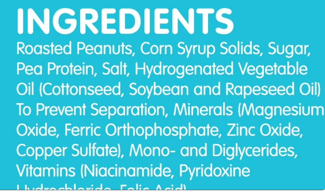
But look at what's actually in some of them.
Corn syrup solids. Hydrogenated vegetable oil, explicitly labeled "to prevent separation." A mineral and vitamin complex at the end, which usually means the product started so far from real food it had to be fortified back up.
That's the same pattern you see across a lot of ultra-processed foods.
Real peanut butter separates.
The oil rises to the top and you have to stir it back in before using it. A lot of people think this means it's gone bad or the product is somehow defective.
It's the opposite. The oil separates because there's nothing in there stopping it from behaving like actual food. When a jar sits on the shelf for months without separating, something was added to prevent it.
Store it upside down before you open it, stir it once when you crack the lid, then keep it in the fridge. It stays mixed from that point on. Takes about 45 seconds total, once.
These exist specifically to catch people who've started paying attention to ingredients. The word "natural" has no legal definition when applied to food processing in the US.
A company can put it on anything.
Some brands labeled natural contains peanuts, sugar, palm oil, salt, and molasses. Better than the classic version, but still more added sugar than you'd use if you made it yourself. The front of the jar is marketing. The back is the actual product, so always check labels.
In most regular grocery stores, you can find at least one clean option if you look.
Adams 100% Natural is widely stocked and has just peanuts and salt. Smucker's Natural is the same. Whole Foods 365 plain peanut butter is just peanuts. Trader Joe's has a few options in the same range.
Some stores have a grind-your-own machine where you press peanuts directly into a jar. One ingredient, made in front of you. Worth using if your store has one.
In the UK, Meridian is the easiest to find with clean ingredients, Sainsbury's store brand and several others. In Canada, MaraNatha, Kraft All Natural Peanut Butter with Sea Salt and many store-brand natural peanut butters come in at one or two ingredients.
PB2 and similar: the basic versions are just peanuts with most of the fat pressed out. If the ingredients are peanuts and salt, it's fine. Some versions add sugar, so check before you buy.
Anything called a "peanut butter spread" or "peanut butter flavored" product is a different category entirely. Often more sugar than peanuts. The word "flavored" in the name is the tell.
Flip the jar. Read the ingredients. Ask yourself: could I make this in my kitchen?
Roasted peanuts plus a food processor equals peanut butter. If the jar contains ingredients you wouldn't think to add at home, it's been processed past what peanuts actually need.